
In this article
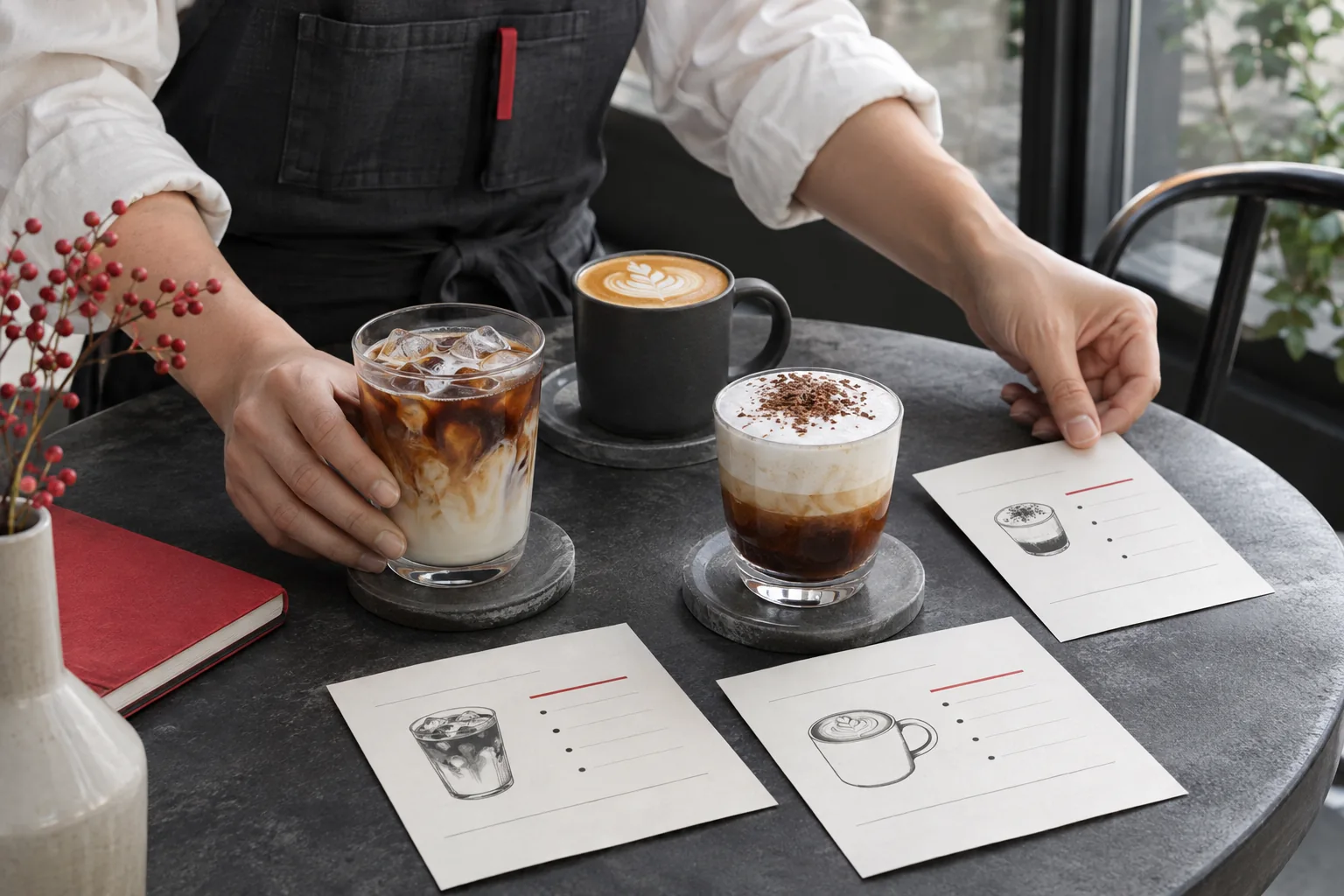
A coffee shop menu is both a promise to guests and a cost-control tool. Without standard recipe cards, the team cannot consistently reproduce drinks and the owner cannot reliably assess unit economics. Start with a manageable range and measurable ingredients.
For an Odesa café menu, calculate recipe costs using actual supplier quotes and delivery terms for your location. Test the range and pricing against your own guests’ buying patterns rather than copying another café’s menu.
Match menu size to the operation
Select core drinks and a limited number of distinctive additions based on customer needs and bar capacity. Every extra ingredient adds storage, waste and training requirements. A longer menu is not necessarily a stronger one; consider what your team can make consistently at peak demand.
What a recipe card should include
Record the drink name, portion size, ingredient weights or volumes, method, yield, presentation, permitted substitutions and relevant allergens. Keep food safety and storage instructions aligned with the specific products. Staff should have one current version of each recipe rather than conflicting copies.
A worked direct-ingredient cost example
Using hypothetical prices only: 18 g of coffee at UAH 800 per kg costs 18 × 0.80 = UAH 14.40. A 200 ml serving of milk priced at UAH 50 per litre costs 200 × 0.05 = UAH 10. Combined ingredients are UAH 24.40, excluding packaging, waste and overhead. These are educational figures, not current supplier quotations or Coffee Club’s actual costing.
Differentiate margin and markup
At an illustrative selling price of UAH 80 and direct cost of UAH 24.40, the difference is UAH 55.60. Gross margin as a share of selling price = 55.60 / 80 × 100 = 69.5%. Markup relative to direct cost = 55.60 / 24.40 × 100 ≈ 227.9%. Neither number is net profit: rent, payroll and other expenses still need covering.
Use sales and waste data
Recalculate cards when supplier prices or recipes change. Compare item-level demand, direct contribution and waste, and consider how products affect whole-ticket sales. Removing a drink solely because its ingredient margin is lower can overlook broader customer behaviour.
Next step
For tailored recipes, costing and a workable product range, explore: coffee shop menu consulting.